The world of e-commerce is moving faster than ever. Every day, new online stores pop up, more customers shop on their phones, and global supply chains become more complex. In this fast-changing environment, traditional ways of managing inventory just can't keep up. Many businesses still use spreadsheets or manual systems, and these old methods often lead to costly mistakes, missed sales, and unhappy customers. The pressure is clear: to succeed, companies need to be quicker, smarter, and more accurate with their stock.
This is where inventory management software automation steps in, completely transforming how online businesses operate. Automation not only saves time but also cuts errors, boosts profits, and keeps customers happy. In this deep dive, we'll explore how automation is reshaping e-commerce, the dangers of manual processes, and how solutions like Bizmation give companies a real edge. By the end, you'll see why automated inventory management is no longer a luxury—it's a necessity for growth.
Running an e-commerce store without automation is like sailing a ship with no navigation tools. Manual inventory management brings many hidden risks and lost opportunities, especially as your business grows.
Even the most careful team can make mistakes. Typing the wrong number in a spreadsheet, forgetting to update a stock count, or misplacing a product can all lead to big problems. For example, selling an item that's actually out of stock causes order cancellations, refunds, and negative reviews.
Too much stock means wasted money, while too little means missed sales.
What many don't realize is how quickly small mistakes add up. If you have hundreds of products, even a 1% error rate can mean dozens of mistakes each month. These errors may go unnoticed at first, but over time they affect your reputation, profit margins, and even your ability to plan for the future.
For example, a business owner might think they have 10 units left of a best-selling product because the spreadsheet says so. But in reality, two were returned and damaged, three were misplaced, and one was accidentally shipped twice. By the time they notice, customers are already complaining.
Manual systems also create confusion during busy periods like Black Friday or holiday sales. Staff rush to fulfill orders, and mistakes become more likely. A single wrong entry can cause a chain reaction, affecting stock counts, order processing, and even customer service.
Suddenly, the business is dealing with angry emails, refund requests, and possibly negative social media posts—all because of a small error.
Manual tracking is slow. Staff spend hours checking stock, updating records, and double-checking numbers. This time could be used for improving the customer experience, marketing, or product development. As your business grows, these manual tasks multiply, making it harder to keep up.
Consider a small team that spends two hours every day counting inventory and updating spreadsheets. That’s ten hours a week, or over 40 hours a month—an entire workweek spent on tasks that could be automated. If the business adds more products or sales channels, the workload doubles or triples.
Staff become frustrated, and their time is wasted on repetitive work instead of building relationships with customers or exploring new growth strategies.
Repetitive tasks also lead to burnout. People get bored, lose focus, and are more likely to make mistakes. Over time, talented employees may leave for more interesting jobs, leaving the business with higher training costs and less experienced staff.
Without real-time data, managers are often guessing. They might not see trends, such as fast-selling items or slow movers, until it's too late. Decisions based on old or incomplete information can hurt profits. For example, reordering a slow-selling item wastes money, while running out of a best-seller frustrates loyal customers.
Imagine you run a store and want to know which products are trending this month. If you rely on manual records, you might need to collect sales data from different spreadsheets, compare notes with warehouse staff, and check emails for purchase orders.
By the time you finish, the information is already outdated. This slow process means you might miss out on a chance to restock a hot product or clear out slow movers with a special promotion.
Delayed decisions can also affect cash flow. If you buy too much inventory based on old data, your money is tied up in unsold stock. If you buy too little, you miss sales and disappoint customers. Real-time visibility is essential in e-commerce, where trends can change in days or even hours.
Many online stores sell on several platforms—like their own website, Amazon, eBay, or social media. Tracking inventory across all these places, manually, is almost impossible. Overselling and stockouts happen often, and customer service suffers.
For example, a business might sell a product on both Shopify and Amazon. If someone buys the last item on Amazon, but the team forgets to update Shopify, another customer might buy it before the stock level is corrected. This leads to awkward apologies, refunds, and even negative feedback.
Managing returns across channels adds more confusion—did the item come from eBay or the website? Which account needs to be updated?
As your business adds more channels (like Facebook Shops, Instagram Shopping, or international marketplaces), the risk grows. Manual tracking simply can’t keep up, and the business may decide to stop expanding, missing out on new customers.
Manual systems make it hard to spot mistakes or fraud. A single miscount or lost item can lead to a big financial hit. Audits take longer, and problems may not be discovered until it's too late to fix them.
For example, you might discover during an annual audit that your actual stock is much lower than you thought. This means you’ve been selling products you don’t have, or worse, you’ve lost money to theft or misplacement. Recovering from these surprises can take weeks or months and might require expensive emergency shipments or discounts to unhappy customers.
Additionally, manual systems make it difficult to detect patterns of loss or fraud. If a staff member is taking items or making unauthorized changes, the errors may be hidden among the many manual updates. Automated systems, by contrast, keep detailed logs and can quickly flag unusual activity.
As your business grows, so does the complexity. Managing hundreds or thousands of products by hand simply doesn't work. Mistakes become frequent, and staff become overwhelmed, leading to burnout and poor performance.
Scaling up means more products, more sales channels, and more customers with higher expectations. Manual systems may work for a small shop with a few items, but they break down as the business expands. The workload becomes unmanageable, and the risk of errors grows.
A business owner might dream of opening a second warehouse or launching in a new country. But if inventory is managed manually, the complexity is too great. The fear of making costly mistakes can stop growth before it starts.
Non-obvious insight: Many beginners don't realize that manual systems can also hurt supplier relationships. Late or wrong orders damage trust, and suppliers may prioritize other clients. Another hidden risk is data loss—a simple spreadsheet crash can erase months of stock records.
Another insight: Manual processes also make it hard to track seasonal patterns or customer preferences. Over time, you miss out on valuable information that could help you plan promotions or improve your product mix.
Inventory management software automation means using smart tools to handle inventory tasks with minimal human effort. Instead of updating spreadsheets, the software tracks everything in real time and takes action automatically.
Automatic Stock Updates: When a sale happens, inventory levels change instantly, across all connected channels. This prevents overselling and keeps your records accurate.
Low Stock Alerts: The system warns you before you run out, so you can reorder in time. You can set custom thresholds for each product.
Order Syncing: Orders from all sales channels are combined in one dashboard, making it easy to track and fulfill them. This streamlines processing and avoids confusion.
Barcode and RFID Integration: Scanning items updates the system instantly, reducing errors and saving time. This also speeds up receiving and shipping.
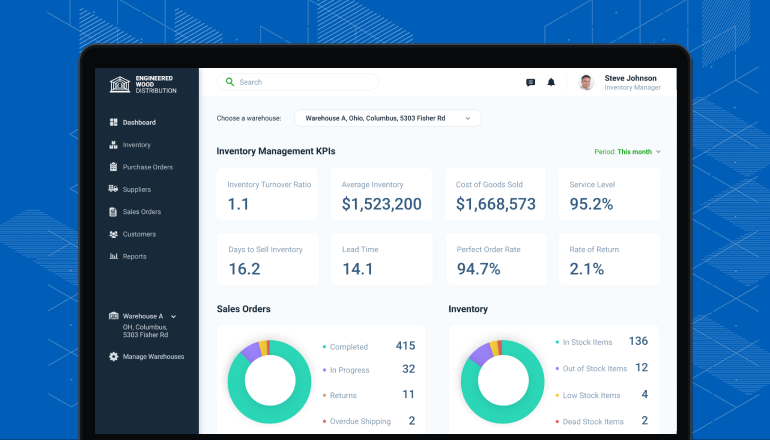
Reporting and Analytics: The software creates reports on sales, trends, and stock levels, helping you make smarter decisions. You get visual dashboards, custom reports, and exportable data.
Other common features include batch tracking (for food or electronics), serial number tracking (for warranties), and automated purchase orders. Advanced systems can even forecast demand or suggest optimal stock levels.
Imagine you run a store selling phone accessories. A customer buys a phone case from your website. The software:
Instantly reduces the stock count
Updates inventory on your Amazon and eBay stores
Alerts you if stock is low
Adds the sale to your financial records
Prepares a pick list for your warehouse team
All of this happens with almost no manual work. If you had to do these steps by hand, it would take much longer and mistakes would be likely.
Another example: You receive a shipment of new products. Instead of writing down each item or updating a spreadsheet, you scan the barcodes as you unpack. The system updates stock levels, assigns locations in the warehouse, and even checks for backorders. If some items are damaged, you can mark them as “unsellable” with one click, keeping your records accurate.
Automation also makes it easier to manage promotions or bundles. If you create a bundle with three products, the system tracks the stock for each item. When a bundle is sold, inventory for all three products updates, preventing accidental overselling.
Modern inventory automation uses several advanced tools:
Cloud computing for access anywhere, anytime. You can manage inventory from your office, home, or even on the go.
APIs to connect with e-commerce platforms, shipping services, and accounting software. This allows seamless data sharing between systems.
Machine learning to predict demand and suggest reorder points. Over time, the system learns your sales patterns and helps you avoid running out or overstocking.
Mobile apps for inventory counts, receiving, and order picking. Staff can use tablets or smartphones, making warehouse work faster and more accurate.
RFID tags for high-value or high-volume products. This enables fast, hands-free tracking.
Some systems also offer integration with point-of-sale (POS) terminals for businesses with both online and offline sales, ensuring that all inventory movements are tracked in one place.
E-commerce is more competitive than ever. Customers expect fast shipping and accurate orders. Even small mistakes can lead to bad reviews, lost sales, and damage to your brand. Automated inventory management helps you keep up and even get ahead.
In today’s market, consumers shop around. If your store is out of stock or slow to ship, they’ll buy elsewhere. Automation lets you promise (and deliver) reliable service. It also makes it easier to run sales, launch new products, or test new markets without fear of losing track.
Non-obvious insight: Automation doesn't just reduce errors; it also frees up mental space. Your team can focus on strategy and growth, not boring tasks. Another often-missed benefit is better data security—cloud software usually includes backups and protections that manual systems lack.
Additional insight: Automated systems can help detect and prevent fraud. By tracking every transaction, return, and adjustment, you can spot unusual patterns and act quickly. This added security is especially important as your business grows.
Inventory management is just one part of the e-commerce puzzle. Full automation goes further, connecting inventory with other business processes to give you a true edge over competitors.
Automated systems can connect with shipping carriers. When an order comes in, the software can:
Print shipping labels instantly, choosing the correct carrier based on rules you set (like fastest or cheapest).
Update customers with tracking numbers automatically, reducing “where is my order?” emails.
Assign orders to the right warehouse or fulfillment center, especially useful if you ship from multiple locations.
Batch orders for faster picking and packing, optimizing routes for warehouse staff.
Flag high-priority or expedited orders, ensuring they get special attention.
This cuts shipping mistakes and speeds up delivery, making customers happier. It also allows you to offer features like same-day or next-day shipping without extra stress.
Example: A store using automation can process 100 orders in the time it used to take to handle 20. During busy seasons, this means more sales and fewer delays.
With automation, you can set up automatic reorder points. When inventory falls below a set level, the software can send a purchase order to your supplier—no manual emails needed. This keeps shelves stocked and prevents missed sales.
Track supplier performance, such as delivery times, defect rates, and pricing.
Store contact details, contracts, and order history in one place.
Compare quotes from multiple suppliers to get the best deal.
Receive alerts if a supplier is late or if a product is discontinued.
Automated supplier management also helps you negotiate better terms. With clear records of your orders and performance, you have more leverage in discussions.
Example: If your main supplier raises prices, you can quickly see which alternatives are available and switch without disrupting your business.
Returns are common in e-commerce. Automated systems can track returned items, restock them if possible, and update financial records. This reduces confusion and helps you spot return trends, which can improve product quality or descriptions.
Automate return labels and instructions for customers.
Track reasons for returns (wrong size, damaged, not as described).
Restock items automatically if they are in good condition.
Flag items that should not be resold.
Update inventory and accounting instantly.
Efficient returns handling improves the customer experience and reduces costs. You can also use return data to improve your products or listings.
Non-obvious insight: Tracking return reasons helps you spot problems with suppliers, packaging, or product descriptions. Fixing these issues reduces future returns and increases profits.
Some automation tools can send personalized messages to customers—like order confirmations, shipping updates, or requests for reviews. Fast, accurate communication leads to higher satisfaction and more repeat purchases.
Set up automatic responses to common questions (like shipping times or return policies).
Notify customers if an order is delayed or out of stock.
Collect feedback and reviews to improve your business.
Segment customers for targeted promotions or loyalty programs.
Automation frees your support team to handle complex issues, while routine updates happen automatically.
Example: A customer who gets quick updates is less likely to call or email with complaints, reducing your support workload.
Inventory data connects with accounting software, making it easy to track profits, costs, and taxes. You get a clear picture of your business health in real time.
Sync sales, returns, and expenses with your accounting system.
Generate invoices, receipts, and purchase orders automatically.
Track cost of goods sold (COGS) for accurate profit analysis.
Prepare for tax season with clean, organized records.
Financial automation reduces errors, saves time, and helps you make smarter business decisions.
With detailed sales and inventory data, you can spot trends and adjust marketing. For example, if blue headphones sell out quickly, you can promote them on social media or order more. Automation can even trigger special offers when stock is high.
Segment customers based on purchase history for targeted campaigns.
Run flash sales or clearance events with live inventory tracking.
Offer personalized recommendations based on browsing or buying behavior.
Test new products or bundles and measure results instantly.
Marketing automation helps you get more value from your data, driving higher sales and customer loyalty.
If you sell on several platforms, automation makes sure all your stores show the correct stock. No more overselling or running out. This is vital for customer trust.
Add or remove sales channels with minimal setup.
Sync prices, promotions, and descriptions across platforms.
Manage international sales, including currency and tax settings.
Analyze performance by channel to optimize your strategy.
Multi-channel automation allows you to grow without multiplying your workload.
Non-obvious insight: Automation can help you test new markets faster. By linking new sales channels with your inventory system, you can expand without huge extra work. Another hidden advantage is easier compliance—automated records make audits and tax filing much simpler.
Additional insight: Automated systems can help detect counterfeit or unauthorized sales by tracking serial numbers or batch codes. This protects your brand and ensures only genuine products reach your customers.
In a crowded market of software tools, Bizmation stands out as a reliable partner for e-commerce businesses of all sizes. Whether you run a small online shop or manage a large warehouse, Bizmation offers solutions to automate and simplify your operations.
Bizmation is a modern technology company focused on business automation. Their software is designed to handle the real-world challenges of e-commerce, retail, and distribution. Bizmation understands that every business is different, so their tools are flexible and customizable.
Their team includes industry experts, software engineers, and support specialists who listen to customer needs. They regularly update their platform based on feedback and the latest trends in e-commerce.
Bizmation believes in empowering businesses. Their goal is to remove manual, repetitive work so you can focus on growth. They combine deep industry knowledge with the latest technology, giving you both power and simplicity.
They also value transparency and reliability. Pricing is clear, contracts are flexible, and data security is a top priority. Bizmation aims to build long-term partnerships with their clients, supporting growth at every stage.
User-friendly interface: Even non-technical staff can learn it quickly. The dashboard uses simple language, clear icons, and helpful tips.
Scalable solutions: Works for new startups or large enterprises. You can start with basic features and add more as you grow.
Strong support: Responsive help when you need it. Support is available by chat, email, and phone, with tutorials and guides for self-help.
Continuous updates: Always improving, with new features added regularly. Customers get access to the latest tools without extra fees.
Secure cloud platform: Your data is safe and accessible from anywhere. Bizmation uses industry-standard encryption, regular backups, and disaster recovery plans.
Custom integrations: With a powerful API, Bizmation connects with unique systems or third-party apps, making it easy to build a workflow that fits your business.
Bizmation offers a full suite of automation tools, including:
Inventory management automation: Real-time tracking, alerts, and reporting.
Order and shipping automation: Sync with carriers, print labels, and automate notifications.
Supplier and purchasing management: Automatic reordering, supplier scorecards, and purchase order tracking.
Analytics and reporting: Visual dashboards, custom reports, and export options.
Integration with popular e-commerce platforms and marketplaces: Shopify, WooCommerce, Amazon, eBay, and more.
This all-in-one approach means you don’t need to juggle multiple software subscriptions. Everything works together smoothly.
Bizmation also offers advanced features like batch tracking, serial number management, and mobile apps for warehouse staff. The platform is regularly tested for security and reliability, ensuring your business runs smoothly 24/7.
A medium-sized online clothing retailer switched to Bizmation. Before, they struggled with overselling and missed orders, especially during big sales. After switching, order mistakes dropped by 80%, and customer satisfaction increased. Staff reported less stress and more time to focus on marketing and new products.
Another example: A distributor with three warehouses used to spend hours each week consolidating stock reports. With Bizmation, all locations sync automatically. Inventory managers can transfer stock between warehouses, fulfill orders from the closest location, and see real-time reports. This improved delivery times and reduced shipping costs.
Non-obvious insight: Bizmation’s flexible pricing model means you only pay for what you need. Many businesses start small and add more features as they grow, avoiding wasted spending. Also, Bizmation’s API allows custom integrations, which helps you connect unique tools or platforms specific to your business.
Additional insight: Bizmation’s built-in training modules help new staff learn the system quickly, reducing onboarding time and mistakes.

Switching to Bizmation can bring many direct and indirect advantages to your e-commerce operation. Here are the main benefits you can expect:
Every sale, return, or restock is tracked instantly, across all your channels. This means you always know what you have, avoiding embarrassing stockouts or costly overstock.
With real-time data, you can answer customer questions quickly, plan promotions with confidence, and avoid last-minute emergencies. Accurate records also simplify audits and year-end inventory counts.
Automatic updates and alerts greatly reduce human mistakes. No more selling items you don’t have or missing chances to restock best-sellers.
This also means fewer refunds, less time spent on support, and a better reputation with your customers. As your business grows, the risk of errors increases, so automation becomes even more valuable.
Orders are gathered from all your sales platforms and sent to fulfillment automatically. Shipping labels, pick lists, and tracking updates are created without delay, so customers get their orders quickly.
Fast processing means you can offer same-day or next-day shipping, compete with larger stores, and handle busy periods without stress. It also reduces the risk of lost or delayed orders.
Bizmation connects with platforms like Shopify, WooCommerce, Amazon, and eBay. You can add new channels as you grow, without extra complexity.
If you decide to sell on a new marketplace, you can integrate it in minutes. Bizmation keeps all inventory in sync, so you can expand your reach without multiplying your workload.
With sales trends and stock reports at your fingertips, you can reorder the right products at the right time. This prevents both waste and missed opportunities.
Bizmation’s analytics show you which products are trending, which are slow movers, and when seasonal spikes occur. You can adjust your purchasing strategy to maximize profits.
Accurate stock, fast shipping, and clear communication lead to happier customers, more positive reviews, and repeat business.
Bizmation also makes it easy to handle returns, answer questions, and resolve issues quickly. A smooth experience keeps customers coming back.
Less manual work means fewer staff hours spent on boring tasks. Fewer mistakes mean less money lost on refunds, returns, or emergency shipping.
Some businesses save up to 25% in administrative costs by switching to automation. Over time, these savings add up, freeing resources for marketing or new products.
Your data is stored safely in the cloud, with regular backups. Even if your local computer fails, your business keeps running.
Bizmation uses bank-level encryption, two-factor authentication, and secure servers. You can control who accesses what data, protecting your business from accidents or attacks.
Bizmation can connect with accounting, shipping, and marketing tools. If you use unique software, custom integrations are possible using their API.
This flexibility ensures you can build the exact workflow your business needs—no more workarounds or manual data transfers.
Visual dashboards and reports help you spot trends, measure performance, and plan for growth. You can see which products sell best, when to run promotions, and how your business is changing over time.
Analytics can also help you identify bottlenecks, test new ideas, and track the impact of marketing campaigns.
Non-obvious insight: Bizmation’s mobile access feature is a game-changer for managers on the go. You can check stock, approve orders, or see reports from any device. Another hidden benefit is better supplier negotiation—you can show suppliers your sales trends to get better prices or terms.
Additional insight: Bizmation’s built-in audit logs track every action, making it easy to investigate issues or train new staff.
Below is a comparison of key Bizmation features against traditional manual methods:
|
Feature |
Manual System |
Bizmation |
|---|---|---|
|
Stock Updates |
Slow, error-prone |
Instant, automatic |
|
Order Processing |
Manual, time-consuming |
Automated, real-time |
|
Multi-Channel Sync |
Difficult, often inaccurate |
Seamless, accurate |
|
Reporting |
Manual, basic |
Advanced, visual |
|
Data Security |
Risk of loss/corruption |
Cloud backups, secure |
|
Supplier Management |
Emails, phone calls |
Automated POs, tracking |
|
Returns Handling |
Manual, slow |
Automated, tracked |
|
Mobile Access |
Limited or none |
Full mobile support |
|
Custom Workflows |
Hard to manage |
Easy, flexible |
Investing in automation with Bizmation isn’t just about saving time—it’s about unlocking new growth and potential for your business.
As your business grows, you’ll handle more products, orders, and customers. Bizmation handles this increase without breaking down. You can add new sales channels, warehouses, or staff accounts easily.
Whether you open a second store, add international shipping, or partner with new suppliers, Bizmation keeps everything in sync. You don’t need to worry about losing track or missing orders.
Example: An online pet supply store expanded from 100 to 2,000 SKUs in a year. With Bizmation, they managed the growth without hiring extra staff or increasing errors.
Bizmation’s detailed analytics help you see which products are stars and which are slow movers. You can stop wasting money on poor sellers and invest in what works.
You can also analyze customer behavior, seasonal trends, and marketing performance. This helps you make data-driven decisions and avoid costly mistakes.
Want to sell on a new marketplace or open a second warehouse? With Bizmation, you can connect new channels and locations quickly, with all inventory staying in sync.
Launch new sales channels with a few clicks.
Manage multiple warehouses from one dashboard.
Assign orders to the closest warehouse for faster delivery.
This flexibility allows you to test new ideas or markets without major investment.
Automated purchasing and sales tracking help you avoid tying up money in slow-moving stock. You can keep cash available for marketing, expansion, or emergencies.
Bizmation’s reorder suggestions are based on real sales data, helping you buy just the right amount. This reduces waste and improves profitability.
A smooth, reliable shopping experience brings customers back. Happy customers leave good reviews, recommend your store, and spend more over time.
Automation ensures orders are accurate, shipped quickly, and communicated clearly. Even when something goes wrong, fast, automated support helps resolve issues.
A fast-growing electronics retailer adopted Bizmation after experiencing constant stockouts on popular gadgets. Within six months:
Stockouts dropped by 90%
Order errors fell by 70%
Monthly sales increased by 35%
Customer complaints fell sharply
The owner credited Bizmation’s real-time alerts and multi-channel sync for this turnaround.
Another example: A beauty products brand used Bizmation to test selling on TikTok Shop. With automation, inventory and orders synced with their main store, letting them experiment without extra staff or risk.
Automation reduces stress and boring work for your team. Staff can focus on creative or high-value tasks, leading to lower turnover and higher morale.
Bizmation’s easy interface means less training time and fewer mistakes. Staff appreciate being able to do their jobs faster and with fewer headaches.
With fewer errors, faster order handling, and less manual data entry, overall costs go down. Some businesses report saving up to 25% in administrative expenses.
Over time, these savings add up. You can reinvest in marketing, new products, or better customer service.
Automated records help you meet legal and tax requirements. If you’re audited, it’s easy to provide accurate reports.
Bizmation tracks all inventory movements, sales, and returns. This makes it simple to prove compliance with local or international regulations.
Non-obvious insight: Bizmation’s custom workflow options can help you set up unique approval processes or rules. For example, you can require manager approval for large orders or automate special handling for VIP customers.
Additional insight: Bizmation’s system logs every action, making it easy to investigate issues or monitor staff performance.
Here is a quick look at how Bizmation supports growth at different business stages:
|
Business Stage |
Main Challenge |
How Bizmation Helps |
|---|---|---|
|
Startup |
Limited time and money |
Simple setup, pay-as-you-grow pricing |
|
Growth |
Managing more products/channels |
Easy channel integration, real-time data |
|
Established |
Complex operations |
Custom workflows, advanced reporting |
|
Enterprise |
Global scale, compliance |
Multi-warehouse, audit trails, API integrations |
The world of e-commerce is changing quickly. Manual inventory management can no longer keep up with customer expectations, supply chain complexity, or the need for speed and accuracy. Automation is no longer just a “nice to have”—it’s a must for survival and growth.
Bizmation offers a smart, flexible solution that lets you focus on what matters: serving your customers, growing your business, and staying ahead of the competition. Whether you’re just starting or ready to scale up, Bizmation’s automation tools can help you work smarter, save money, and unlock new opportunities.
The real advantage of automation is not just in saving time or reducing errors—it’s in freeing your team to innovate. When you trust your inventory system, you can experiment with new sales channels, offer unique promotions, and provide the kind of fast, reliable service that turns first-time buyers into loyal fans.
Non-obvious insight: Many businesses underestimate the emotional impact of automation. Owners and staff feel less stress, more control, and greater confidence in daily operations. This positive energy helps attract and retain both customers and employees.
Ready to see the difference automation can make? Explore how Bizmation can transform your e-commerce business today, or learn more from independent reviews at G2.
Inventory management software automation uses technology to track, update, and manage stock levels without manual work. It connects sales, purchasing, and warehousing, updating everything in real time. This reduces errors, saves time, and improves accuracy for e-commerce businesses.
Automation also includes features like low stock alerts, order syncing, and reporting, making it easier to run your business and grow.
Bizmation syncs inventory across all your sales channels—such as your website, Amazon, and eBay—so stock levels are always accurate. When a sale happens on one channel, inventory is updated everywhere. This prevents overselling and keeps customers happy.
It also lets you add new channels quickly, manage promotions across platforms, and get reports by channel for better planning.
Yes, Bizmation offers flexible plans that fit both small startups and large companies. Small businesses can start with basic features and add more as they grow. The user-friendly design means you don’t need technical skills to get started.
Support, training, and clear pricing make Bizmation a safe choice for new businesses.
Bizmation is built for easy integration. It connects with popular e-commerce, shipping, and accounting platforms. If you have a custom tool, Bizmation’s API allows you to build custom connections for a seamless workflow.
This ensures you can keep your favorite tools while adding automation.
Bizmation provides responsive customer support through live chat, email, and phone. They also offer setup guides, tutorials, and regular updates. This helps you get the most from your automation, whether you’re a beginner or an experienced manager.
Support staff are trained to help with setup, troubleshooting, and best practices.
Most businesses can get started in a few days, depending on the number of products and channels. Bizmation’s onboarding team helps import your data, connect your platforms, and train your staff.
If you use a common platform like Shopify or WooCommerce, setup is even faster.
Bizmation uses secure cloud servers, encryption, and regular backups to protect your data. You control who can access your information, and all activity is logged for transparency.
Privacy policies are clear and comply with major regulations, giving you peace of mind.
Yes, Bizmation offers mobile access for key features like inventory checks, order approvals, and reporting. This is perfect for owners or managers who travel or work outside the office.
Automation handles repetitive, error-prone tasks, but your staff are still essential for customer service, strategy, and growth. Most businesses use automation to free up staff time for higher-value work, not to replace them.
Transforming your e-commerce business with automation isn’t just smart—it’s essential. With Bizmation, you can step into the future of inventory management and leave manual headaches behind.