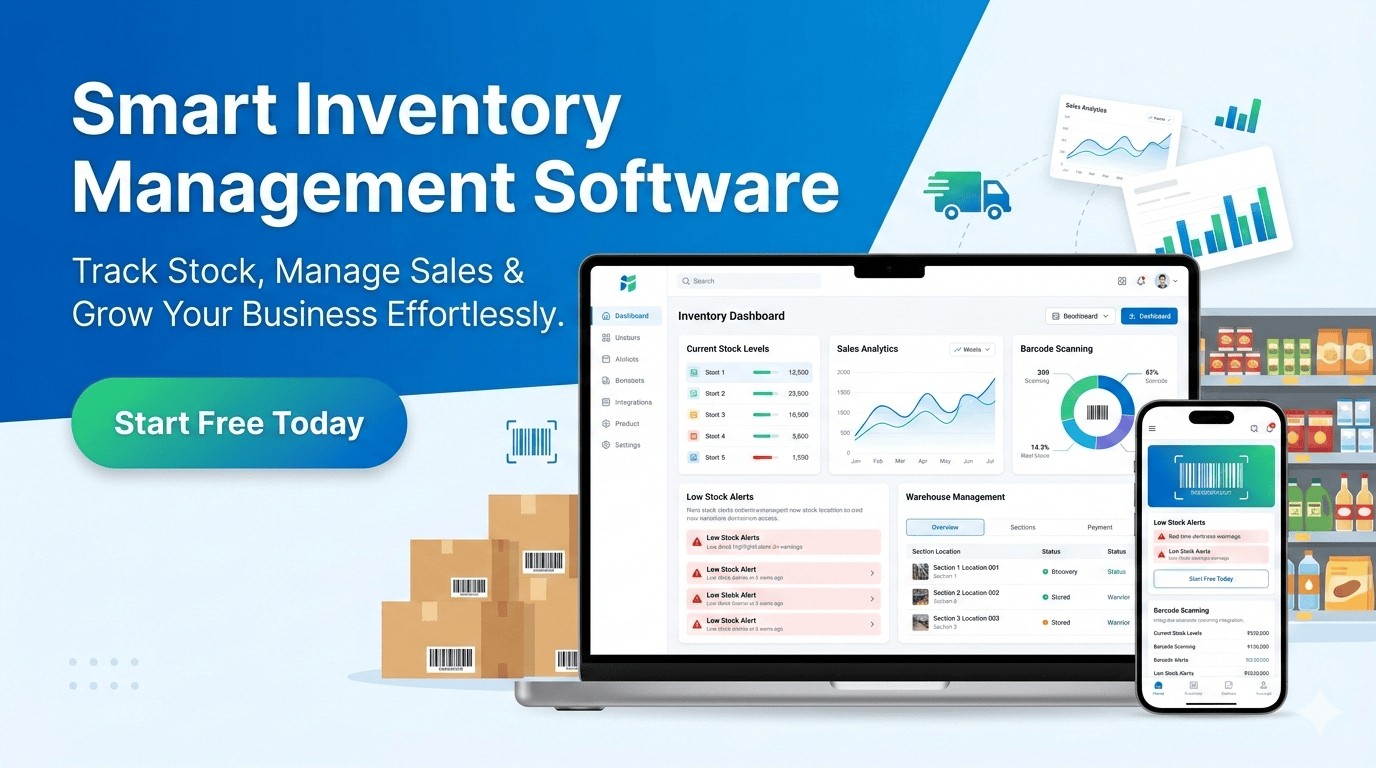
E-commerce has changed how people buy and sell products. Today, millions of online stores compete for speed, accuracy, and customer satisfaction. Buyers expect fast deliveries, real-time stock updates, and seamless order tracking. But as demand grows, traditional inventory systems struggle to keep up. Manual processes often lead to mistakes, slowdowns, and unhappy customers. Many business owners feel overwhelmed by the complexity of modern supply chains, especially when handling multiple sales channels, warehouses, and product lines.
The solution? Inventory management software automation. This technology is reshaping e-commerce, offering smarter ways to track, update, and optimize inventory. Among the top providers, Bizmation stands out for its powerful automation tools and user-friendly features. In this article, we’ll explore how automation is transforming online businesses, why manual systems fall short, and how Bizmation helps companies grow faster and smarter.
Most small businesses start with simple tools like spreadsheets or pen-and-paper logs. At first, this seems manageable. You list products, track sales, and update stock by hand. But as your store grows, manual methods quickly become risky.
Manual entry is prone to human error. One wrong number can cause big problems. If you miscount stock, you might oversell and disappoint buyers. Missing products lead to canceled orders, refunds, and negative reviews. On the other hand, underestimating inventory means you miss sales, leaving money on the table.
Errors don’t just come from miscounting. They can happen during data entry, when copying numbers from paper to a spreadsheet, or when transferring information between systems. Even a small error—like typing “100” instead of “10”—can create chaos in your warehouse.
For example, you might think you have enough products for a big sale but actually run out, leading to canceled orders and unhappy customers.
Another common issue is losing track of returns. If a product is returned and not properly added back to inventory, you might think you have fewer items than you actually do. Over time, these mistakes pile up, making it hard to trust your own numbers.
Updating records by hand takes hours. Staff spend time checking shelves, confirming orders, and adjusting counts. This slows down order fulfillment, especially during busy periods. Time lost on inventory means less time for marketing, customer service, and growth.
Consider a scenario where your business receives a surge in orders during the holiday season. Staff have to manually check stock, update spreadsheets, and notify customers if something is out of stock. These steps take valuable time, causing delays in shipping and increasing the risk of sending the wrong product.
Time-consuming processes also make it harder to handle sudden changes. If a supplier delivers late or a product sells faster than expected, you can’t react quickly. Manual updates mean you’re always a step behind the actual situation in your warehouse.
Manual systems rarely show real-time stock levels. If you sell on multiple channels (like Amazon, Shopify, and your own website), keeping inventory updated everywhere is nearly impossible by hand. Products might appear available online but be sold out in reality.
This damages trust and leads to lost customers.
Imagine a customer places an order on your website while another buys the same item on Amazon. Without real-time updates, you might accidentally sell the last unit twice. One customer will be disappointed and may leave a negative review.
This challenge grows as you add more sales channels. Manually updating each platform every time you sell, restock, or receive returns is exhausting and error-prone. In the end, your reputation suffers because customers can’t rely on your store’s information.
As businesses expand, they often manage inventory across several warehouses or stores. Manual tracking becomes even harder. Errors multiply, and coordinating stock movements is confusing. You risk running out in one location while overstocking another.
For example, if you run two warehouses and keep records separately, you might not realize that one location is overstocked while the other is nearly empty. This can lead to unnecessary transfers, wasted shipping costs, and missed sales. Balancing inventory across locations requires precise coordination, which is nearly impossible with manual methods.
Transferring products between locations also creates confusion. If staff forget to update the central spreadsheet or make mistakes during transfers, your inventory records quickly become unreliable.
Manual systems offer little insight. You can’t easily spot trends or predict demand. Without analytics, you struggle to answer questions like: Which products sell fastest? When should I restock? What items are slow-moving? Guesswork replaces smart planning.
For instance, you might notice sales slowing down but not know why. Maybe a new competitor entered the market, or a product is becoming less popular. Without data, you can only guess. This leads to poor decisions, like overstocking unpopular items or missing out on trending products.
If you want to run promotions or discounts, manual tracking makes it hard to know which items need help or which are selling well. This can waste marketing efforts and money.
Many owners believe manual methods save money. But hidden costs add up. Mistakes lead to returns and refunds. Slow updates cause lost sales. Staff spend extra hours on basic tasks. Over time, inefficiencies hurt profits and limit growth.
For example, if a staff member spends two hours a day updating inventory, that’s over 500 hours a year. At $15 per hour, you’re spending $7,500 just on manual tracking. Add the cost of errors, lost sales, and extra stock, and the real price is much higher than you expect.
Hidden costs also include lost opportunities. When your team spends time on manual work, they have less time to focus on growth, marketing, or improving customer service.
As your business grows, manual processes can’t scale. More products, more orders, more channels — the workload becomes overwhelming. You need more staff, more oversight, and more effort just to keep up. Growth stalls, and competitors move ahead.
Imagine doubling your product catalog or adding a new sales channel. Manual tracking means doubling your effort or hiring more staff. This isn’t sustainable. Businesses that don’t automate often reach a “breaking point,” where they can’t grow further without major changes.
Non-obvious insight: Most owners underestimate the impact of manual errors. Even a 2% error rate in inventory can cause thousands of dollars in lost revenue each year, especially if your business operates at high volume.
Another hidden challenge: Manual systems make it hard to comply with regulations. If you sell food, pharmaceuticals, or electronics, tracking batch numbers and expiry dates by hand can lead to legal trouble.
Manual systems also create security risks. Paper records can be lost or damaged, and spreadsheets can be accidentally deleted or overwritten. Without backups and security features, your business is always at risk of losing vital information.
Inventory management software automation uses technology to handle once manual tasks. Instead of updating spreadsheets or counting stock by hand, automated systems track inventory in real time, sync across channels, and alert you to important changes.
Automated systems monitor inventory as sales happen. Every time a product sells, the software updates stock counts instantly. You always know how much inventory is available.
Real-time tracking means you can check your inventory anytime, anywhere. If you’re in a meeting or traveling, you can log in and see accurate numbers. This makes it easier to make quick decisions and respond to changes in the market.
Automation connects your inventory to all sales channels. Whether you sell on Amazon, eBay, Shopify, or your own site, stock levels update everywhere automatically. No more overselling or duplicate entries.
For example, if you run a special promotion on your website, the system automatically updates your inventory on Amazon and eBay as well. This prevents double-selling and keeps your store running smoothly.
The software processes orders, updates statuses, and tracks shipments. You can see which orders are pending, shipped, or delivered — all in one dashboard.
Order management also includes features like packing lists, shipping label generation, and customer notifications. You can set up workflows to handle different types of orders, such as express shipping or international deliveries.
When inventory reaches a certain level, the software can send alerts or even place orders with suppliers. You never run out of popular items.
Some systems allow you to customize reorder points for each product. For example, you might set a lower threshold for fast-selling items and a higher one for slow movers. Automation ensures you always have the right products in stock.
Automated systems generate reports on sales, trends, and stock movement. You gain insights for smarter decisions, like which products to promote or discontinue.
Reports can show you seasonal trends, best-selling items, and products with high return rates. This helps you adjust your strategy and maximize profits.
Many systems support barcode scanners or RFID tags. This speeds up stock checks and reduces errors.
Instead of counting items by hand, you scan barcodes or RFID tags to update inventory instantly. This is especially useful for large warehouses or businesses with many SKUs.
For businesses needing traceability, automation tracks batch numbers, expiry dates, and serial numbers. This is essential for regulated industries.
If there’s a recall or quality issue, you can quickly identify affected products and notify customers or authorities. This protects your business and builds trust.
Imagine you sell t-shirts online. With automation, every sale updates your inventory across all platforms. If you sell 10 shirts on Shopify, the system deducts 10 from your total stock and updates Amazon and eBay automatically. If stock drops below your threshold, it alerts you or places a reorder.
Automation also helps with returns. When a customer sends back a product, the system adjusts inventory and updates availability. You can see all changes in one dashboard, saving hours of manual work.
Automation works by connecting your sales platforms, warehouse systems, and suppliers through APIs (application programming interfaces). These connections allow data to flow instantly between systems, keeping everything synchronized.
For example, if you receive a shipment from a supplier, the system updates your inventory, notifies your sales channels, and adjusts your reorder points. If a customer cancels an order, the software automatically returns the item to your available stock.
Fewer mistakes: Automated updates reduce errors.
Faster order fulfillment: Real-time tracking speeds up shipping.
Better customer experience: Accurate stock means happy buyers.
Easier scaling: Automation handles growth without extra staff.
Smarter decisions: Reports and analytics guide business strategy.
Automated inventory management also means you can offer better services, like same-day shipping or in-store pickup. Customers get what they want, when they want it, increasing loyalty and sales.
Practical example: A mid-sized online store with 5,000 SKUs switched to automation and reduced inventory errors by 85%. Order processing time dropped from 30 minutes per order to under 5 minutes.
Non-obvious insight: Automation can also help with fraud detection. If inventory movement doesn’t match sales data, the system can flag possible theft or misplacement.
Automation also helps you manage promotions and flash sales. By tracking inventory in real time, you can avoid overselling during high-traffic events.

Inventory automation is just one part of modern e-commerce success. Today’s software goes beyond stock management, helping businesses streamline every step of their operations.
Automated systems handle orders from start to finish. When a customer places an order, the software confirms payment, updates inventory, creates a packing slip, and notifies the warehouse. Shipping labels are generated automatically. Tracking numbers are sent to customers. This speeds up fulfillment and reduces mistakes.
For example, in a manual system, staff might need to check payments, print labels, and enter tracking numbers by hand. Automation completes these steps in seconds, reducing the risk of errors and delays. If a customer selects express shipping, the system prioritizes the order and ensures it’s packed and shipped first.
Automation also helps you manage returns and exchanges. When a return is initiated, the system updates inventory, sends a return label, and notifies staff to expect the product.
Automation tools can send personalized emails, offer real-time support, and process returns quickly. Customers receive order updates and can track shipments online. Happy buyers are more likely to return and recommend your store.
For example, after a purchase, the system can send a thank-you email, shipping confirmation, and delivery notification. If a product is delayed, automation can send an apology with a discount code, turning a negative experience into a positive one.
Chatbots and automated help desks can answer common questions, freeing your staff to handle more complex issues. This improves response times and customer satisfaction.
Many inventory management systems connect to marketing tools. You can automate emails, discounts, and loyalty programs. If certain products aren’t selling well, the software can trigger a flash sale or suggest promotions.
For instance, if inventory data shows a slow-moving item, the system can automatically send a discount offer to customers who viewed but didn’t purchase it. You can also schedule campaigns for holidays or special events based on inventory levels.
Automation ensures your marketing efforts are targeted and timely, increasing conversion rates and reducing waste.
Automation helps manage suppliers, purchase orders, and payments. The system tracks which vendors deliver on time and flags issues. You can compare prices, negotiate better deals, and ensure steady supply.
For example, if a supplier frequently delivers late, the system records the delays and alerts you. You can use this data to find a more reliable partner or negotiate better terms. Automated purchase orders reduce paperwork and ensure you never forget to reorder key products.
Automation also helps you manage invoices, track payments, and avoid late fees.
With automation, you get detailed analytics. You can see which products sell best, which days are busiest, and which channels perform best. This helps you plan inventory, marketing, and staffing.
For example, analytics might reveal that sales spike every Friday evening. You can use this information to adjust staffing, run targeted ads, or prepare for increased demand. Data-driven insights help you make smarter decisions and improve your bottom line.
In fast-moving markets, speed and accuracy matter. Automation lets you react faster than competitors. If a trend emerges, you can adjust inventory and marketing instantly. You avoid stockouts, overselling, and slow shipping.
For example, if a new product becomes popular, automated systems can help you restock quickly, run targeted ads, and capture market share before competitors catch up.
Some businesses automate only inventory and ignore other processes. This limits the benefits. To stay ahead, automate order processing, customer service, and analytics too.
Another mistake is not training staff on new systems. Even the best automation tools need skilled users. Make sure your team understands how to use the software and take advantage of all features.
Non-obvious insight: Automation can help with environmental sustainability. By tracking inventory and sales, you can reduce waste, optimize shipping routes, and lower your carbon footprint.
Another overlooked advantage: Automated systems can handle international taxes and customs paperwork, making global expansion easier.
Automation also helps with forecasting. By analyzing past sales and trends, the software can predict future demand, helping you plan production and avoid overstocking.
When choosing automation software, reliability and ease of use are key. Bizmation offers advanced tools designed for e-commerce businesses of all sizes. With a focus on automation, Bizmation helps stores streamline inventory, orders, and analytics.
User-friendly interface: Easy to set up and operate, even for non-technical users.
Customizable workflows: Adapt the system to fit your business needs.
Scalable solutions: Supports growth from small shops to large enterprises.
Strong security: Protects your data with advanced encryption.
Reliable support: Fast, helpful customer service.
Bizmation is trusted by thousands of online stores worldwide. The company invests in new technology, ensuring its software stays ahead of industry trends.
Bizmation’s user interface is designed for simplicity. You don’t need to be a tech expert to get started. The setup process is guided, and most features can be customized with just a few clicks. This makes it easy for new users to adopt and see quick results.
Inventory automation: Real-time stock tracking, multi-channel syncing, and automated reordering.
Order management: End-to-end order processing and fulfillment tools.
Supplier integration: Manage vendors, purchase orders, and payments.
Analytics dashboard: Visual reports on sales, inventory movement, and trends.
Barcode/RFID support: Fast, accurate stock checks.
Batch/serial number tracking: For regulated industries.
API integrations: Connect to other tools, platforms, and marketplaces.
Mobile access: Manage inventory from anywhere using smartphone or tablet.
Bizmation also offers advanced features like demand forecasting, custom alerts, and automated compliance checks. These tools help you stay ahead of the competition and adapt to changing market conditions.
Bizmation has won awards for innovation and customer service. Industry experts praise its automation features and strong uptime record. The software is updated regularly, keeping pace with changing e-commerce needs.
Bizmation’s commitment to quality is reflected in its high customer satisfaction ratings. The support team is available through chat, phone, and email, ensuring you get help when you need it. Regular updates and new features are added based on customer feedback.
Practical advisor tip: When considering Bizmation, ask about integration with your existing platforms. The company offers onboarding support to help you migrate smoothly.
Non-obvious insight: Bizmation’s automation tools can also help with compliance. If you sell products with strict regulations (like electronics or food), the software tracks batch numbers and expiry dates, reducing legal risks.
Bizmation also offers training resources, webinars, and a knowledge base to help you get the most from the system.
Switching to Bizmation brings clear advantages for e-commerce stores. Here are the main benefits:
Bizmation tracks stock as sales happen. You always know what’s available, reducing mistakes and avoiding overselling. Real-time updates improve trust with buyers.
You can also set up alerts for low stock, high returns, or unusual activity. This helps you spot problems early and take action before they affect your business.
Sell on multiple platforms? Bizmation syncs inventory across all channels. If you sell a product on Amazon, it’s updated instantly on Shopify and your own site. You avoid stock discrepancies.
This feature is especially helpful during sales events or busy seasons. You can run promotions on several channels without worrying about overselling or manual updates.
Automated order processing speeds up shipping. Packing slips, shipping labels, and tracking numbers are generated automatically. Customers get their orders faster.
You can also set up rules for different shipping methods, such as express or standard delivery. Automation ensures each order is handled correctly and efficiently.
Bizmation monitors low stock and triggers reorders. You never run out of popular items. The software can even suggest suppliers based on past performance.
You can customize reorder points for each product, taking into account sales velocity, supplier lead times, and seasonal trends. This ensures you always have the right products in stock.
Visual dashboards show sales trends, top products, and slow movers. You gain insights for smarter planning. Reports are easy to export and share.
Analytics can also track customer behavior, such as repeat purchases or high-return items. This helps you fine-tune your marketing and inventory strategies.
The software handles returns, updating inventory and notifying staff. This reduces confusion and speeds up refunds.
Returns are processed quickly, improving customer satisfaction and loyalty. You can also track return reasons to identify quality issues or problem products.
Bizmation lets you customize processes. Adapt order handling, stock checks, and supplier management to fit your business.
For example, you can create workflows for bulk orders, special promotions, or high-value shipments. This flexibility helps you work more efficiently and meet customer needs.
Bizmation uses strong encryption to protect your data. The software also tracks batch numbers and expiry dates, helping you stay compliant with regulations.
Compliance features include audit trails, access controls, and automated reporting for regulated industries. This reduces the risk of fines or legal problems.
Bizmation offers fast, knowledgeable support. Whether you have technical questions or need help with integration, the team is ready to assist.
Support options include live chat, email, phone, and a comprehensive knowledge base. Training and onboarding services are also available.
As your store grows, Bizmation scales with you. Add new products, locations, and channels without slowing down.
The software is designed to handle large catalogs, multiple warehouses, and high order volumes. You can expand your business without worrying about system limits.
Manage inventory from your phone or tablet. Bizmation’s mobile app lets you check stock, process orders, and monitor sales on the go.
This is especially useful for business owners who travel or manage multiple locations. You stay connected and in control, no matter where you are.
Bizmation connects to popular e-commerce platforms, accounting software, and marketing tools. You build an ecosystem that fits your needs.
Integration options include Shopify, WooCommerce, Amazon, QuickBooks, Mailchimp, Stripe, and more. This streamlines your operations and reduces manual work.
Automation reduces labor costs, minimizes errors, and speeds up operations. You save money and grow profits.
Cost savings come from fewer mistakes, faster order processing, and better inventory management. Over time, these savings can be significant.
Bizmation tracks inventory and orders, helping you optimize packaging and shipping. This reduces waste and supports environmental goals.
You can set up rules for eco-friendly packaging, combine shipments, and minimize returns. This helps your business meet sustainability targets and appeal to environmentally conscious customers.
The software flags unusual activity, helping you spot theft or misplacement.
For example, if inventory levels drop without matching sales, the system alerts you. This helps you investigate and resolve issues quickly.
Experience-based guide tip: Many Bizmation users notice fewer errors and faster shipping within weeks of switching. One store reported a 40% drop in returns due to improved inventory accuracy.
Non-obvious insight: Bizmation’s analytics can highlight hidden trends, like products that sell well in certain regions or seasons. You can use this data to expand or adjust marketing.
Bizmation also supports advanced features like automated demand forecasting, multi-currency support, and custom user permissions.
Bizmation isn’t just about tracking inventory. It’s about helping businesses scale, innovate, and stay competitive. Here’s how Bizmation supports growth:
Automation removes bottlenecks. Orders are processed faster, inventory updates instantly, and staff spend less time on manual tasks. This means you can handle more sales without hiring extra workers.
Faster operations also reduce shipping times, leading to happier customers and better reviews. When your team spends less time on paperwork, they can focus on growth and innovation.
Online stores often sell on several platforms. Bizmation syncs inventory across all channels, reducing confusion and errors. You can expand to new markets easily.
Multi-channel support means you can reach more customers without extra effort. You can also test new platforms and markets, knowing your inventory will always be accurate.
With detailed reports, you see which products sell best, which suppliers are reliable, and which channels perform well. This data helps you plan promotions, restocks, and expansions.
For example, you might discover that a certain product sells better on Amazon than on your website. You can adjust your strategy and focus on the most profitable channels.
Automation flags errors, missing stock, and unusual activity. This reduces losses from theft, fraud, or misplacement. Bizmation also helps with compliance, lowering legal risks.
Automated compliance checks ensure you follow industry regulations, such as tracking batch numbers or reporting sales data. This gives you peace of mind and protects your business.
Accurate stock means fewer canceled orders. Fast shipping and easy returns keep customers happy. Positive reviews lead to repeat business and referrals.
Customer satisfaction is critical for growth. Bizmation helps you deliver a reliable, professional experience that builds trust and loyalty.
Bizmation is designed to grow with your business. Whether you add new products, open new locations, or expand globally, the software supports your needs.
You can manage thousands of SKUs, multiple warehouses, and international sales from one dashboard. This flexibility makes it easy to scale your business.
Labor costs drop as manual tasks are automated. Fewer mistakes mean fewer refunds and returns. Faster operations reduce overhead.
Over time, these savings add up. You can reinvest in marketing, product development, or expansion.
A clothing retailer switched to Bizmation and saw these results:
Inventory errors dropped by 85%
Order processing time fell from 20 minutes to 3 minutes
Sales increased by 22% in six months
Customer satisfaction scores improved by 30%
Another example: A home goods store used Bizmation to expand from one to five warehouses. Automation made it easy to manage transfers, track stock, and avoid overstocking.
Below is a comparison between Bizmation automation and manual inventory methods:
|
Feature |
Bizmation |
Manual Methods |
|---|---|---|
|
Inventory Accuracy |
98-99% |
85-90% |
|
Order Processing Time |
2-5 minutes |
20-30 minutes |
|
Multi-Channel Sync |
Automatic |
Manual |
|
Returns Handling |
Automated |
Manual |
|
Reporting |
Visual Dashboard |
Spreadsheet |
|
Scaling |
Easy |
Difficult |
|
Compliance |
Built-in |
Manual tracking |
|
Cost Savings |
High |
Low |
Bizmation users report:
Inventory error rates below 1%
Order fulfillment speeds up by 4-5 times
Customer complaints drop by 35%
Labor costs cut by 20-30%
These improvements aren’t just numbers—they translate to happier customers, more repeat business, and better profit margins.
Straight-to-the-point helper tip: If you want to grow your e-commerce business quickly, automation is essential. Manual systems will hold you back.
Bizmation integrates with many popular tools. Here’s a sample of its connectivity:
|
Platform |
Bizmation Integration |
Typical Use Case |
|---|---|---|
|
Shopify |
Direct |
Online store inventory |
|
Amazon |
API |
Marketplace sales |
|
QuickBooks |
Direct |
Accounting |
|
Mailchimp |
API |
Email marketing |
|
Stripe |
Direct |
Payments |
|
Magento |
API |
E-commerce platform |
|
Google Analytics |
API |
Sales tracking |
Integrations save time and reduce errors. For example, connecting Bizmation to your accounting software ensures sales and inventory data are always in sync, simplifying tax reporting and financial planning.
Not automating returns and refunds
Ignoring supplier performance data
Failing to sync inventory across new sales channels
Not using analytics for demand forecasting
Bizmation solves these problems with built-in tools and easy integrations.
For example, automated returns processing ensures products are quickly added back to inventory, reducing delays and lost sales. Supplier performance tracking helps you choose the best partners and avoid costly delays.
Bizmation’s pricing is competitive and offers strong value:
|
Plan |
Bizmation (USD/month) |
Market Average (USD/month) |
|---|---|---|
|
Basic |
$29 |
$35 |
|
Professional |
$79 |
$95 |
|
Enterprise |
$159 |
$180 |
Calm expert tip: Compare features, not just price. Bizmation offers more integrations and automation for the cost.
Non-obvious insight: Bizmation’s pricing is flexible. As your store grows, you can upgrade or downgrade plans easily, avoiding overpaying.
Bizmation also offers free trials and custom quotes for large businesses.

Bizmation syncs inventory across all sales channels instantly. Every sale, return, or restock updates your inventory in real time. You can see accurate stock levels in the dashboard, reducing errors and overselling.
The system uses automated rules and API connections to ensure data is always up to date. This means you can trust your numbers and make quick decisions.
Yes. Bizmation supports direct and API integrations with popular platforms like Shopify, Amazon, Magento, and WooCommerce. You can connect your store easily and manage inventory from one place.
Integration setup is guided, and support is available if you need help. Once connected, all your sales, inventory, and customer data flow into Bizmation automatically.
Bizmation is compatible with barcode scanners and RFID tags. This speeds up stock checks, reduces manual errors, and improves accuracy in warehouses.
You can use mobile devices, handheld scanners, or fixed readers. The software updates inventory instantly, making stocktakes and audits fast and accurate.
Bizmation offers plans for all sizes, from small shops to large enterprises. Its user-friendly interface and scalable features make it easy for small businesses to start and grow.
Even if you have only a few products or one location, Bizmation can save time and reduce mistakes. As you grow, you can add features and integrations as needed.
Bizmation uses advanced encryption and follows strict security protocols. Your inventory and sales data are protected from unauthorized access. Regular updates ensure compliance with industry standards.
You can set user permissions, track changes, and create backups. This keeps your business safe and compliant with regulations.
E-commerce is growing fast. Manual inventory systems can’t keep up with today’s speed, complexity, and customer expectations. Automation is not just a luxury — it’s essential for staying competitive. Bizmation offers reliable, user-friendly automation tools that help businesses grow, reduce errors, and improve customer satisfaction. By choosing Bizmation, you gain accurate inventory tracking, faster order processing, smarter analytics, and seamless integrations. Don’t let manual methods hold you back. Explore Bizmation for smarter, scalable business operations and join the future of e-commerce automation.
For more information on inventory management trends.